
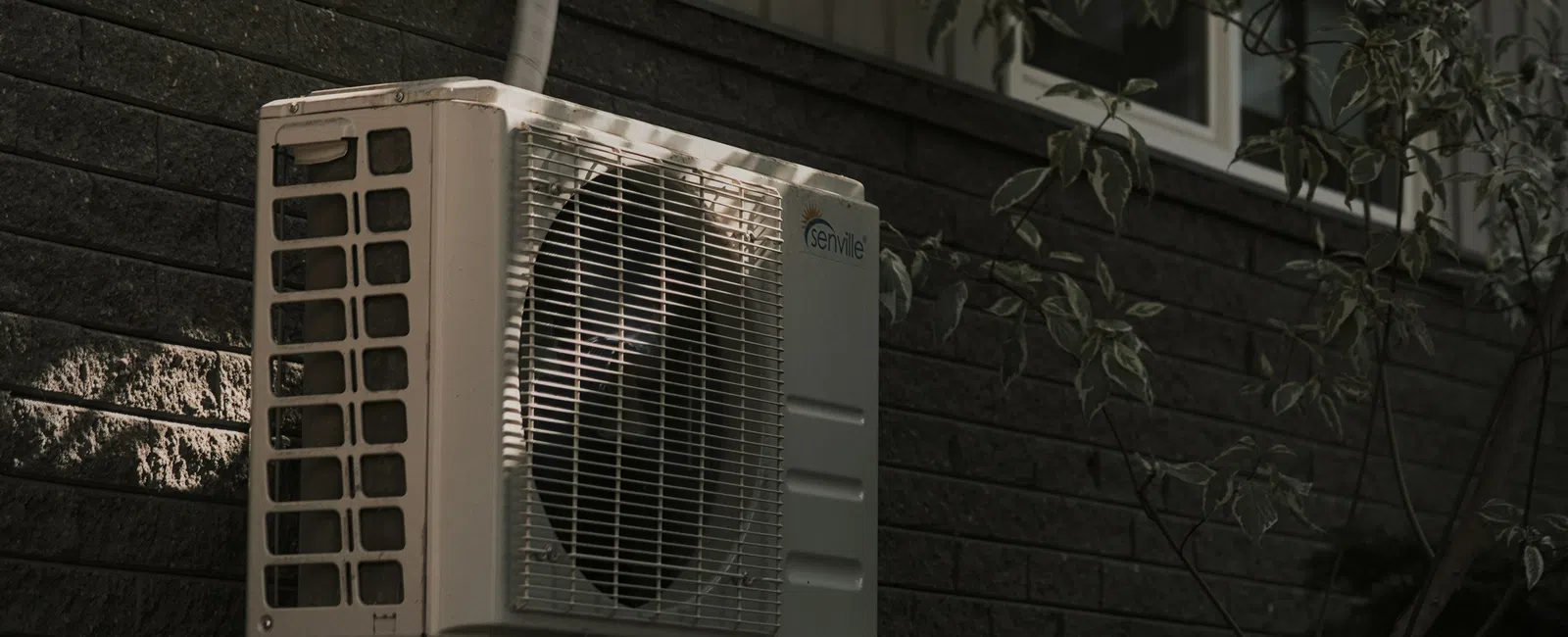
If you own an air source heat pump, it needs professional maintenance twice a year: once in the spring and once in the fall. That is more often than a standard furnace or air conditioner, and there is a good reason for it. Your heat pump never really gets a season off.
A furnace rests all summer. An AC rests all winter. A heat pump does both jobs, running to cool your house in July and to heat it in January. Twice the workload means twice the wear, so twice the maintenance keeps it running the way it should.
Why Heat Pumps Need Service Twice A Year
Most manufacturers, including brands we service like Goodman, Rheem, Carrier, Trane, Lennox, and American Standard, recommend two tune-ups a year for a heat pump. The timing lines up with the seasons that push your system hardest.
A spring visit gets the unit ready for cooling season. A fall visit gets it ready for the cold months, when your heat pump switches into heating mode and leans on parts that sat idle all summer. Booking service before each of these transitions means small problems get caught before a heat wave or a cold snap turns them into a no-heat or no-cool emergency.
If you only manage one visit a year, the fall is the one to protect. Heating puts more strain on a heat pump than cooling does, and a breakdown in January is a lot more uncomfortable than one in April. Two visits are still the target, but one is far better than none.
What Maintenance Does a Heat Pump Need?
Heat pump maintenance splits into two buckets. Some of it you can handle yourself between visits. The rest needs a licensed technician with the right tools.
Here is what homeowners can do on their own:
- Change or clean the air filter every one to three months. A clogged filter chokes airflow and is the single most common cause of weak heating and cooling.
- Keep the outdoor unit clear. Pull weeds, leaves, and grass clippings away, and leave about two feet of open space on all sides.
- Rinse the outdoor coil gently with a garden hose when it looks dirty, with the power off.
- Watch the airflow from your vents and listen for new rattles, hums, or grinding sounds.
Here is what a technician handles during a professional tune-up:
- Checking refrigerant levels and testing for leaks, since a heat pump low on refrigerant loses efficiency fast.
- Testing the reversing valve and defrost cycle, the two parts that let a heat pump swap between heating and cooling.
- Cleaning the indoor evaporator and outdoor coils so a frozen evaporator coil does not shut you down mid-season.
- Inspecting electrical connections, contactors, and the capacitor that starts the system, since a weak one causes hard starts and failures.
- Lubricating motors, testing the thermostat, and clearing the condensate drain.
The filter and the debris around the unit are yours to manage. The refrigerant, electrical, and defrost work belongs to a trained tech.
What Happens When You Skip Heat Pump Maintenance
Neglect does not show up all at once. It builds quietly, and it hits your wallet in a few different ways.
The first is your energy bill. A dirty coil, a low refrigerant charge, or a clogged filter forces the system to run longer to reach the same temperature. Many homeowners see their bills climb 10 to 25 percent when a heat pump is left unserviced, and most never connect the higher bill to the missed tune-up.
The second is comfort. A poorly maintained heat pump struggles to keep up, which is why some homes end up with a heat pump blowing cold air or a system that runs all day and still feels cold. Rooms stop holding temperature, and the unit short cycles or runs nonstop trying to catch up.
The third is the repair bill. Small issues that a tune-up would have caught, like a weak capacitor or a low charge, turn into compressor failures and burned-out motors. Those are the expensive repairs, and they tend to strike on the hottest or coldest day of the year.
The fourth is lifespan and warranty. A well-maintained heat pump often lasts 15 years or more. A neglected one can wear out years early. On top of that, most manufacturer warranties require proof of annual professional maintenance, so skipping service can leave you paying full price for a repair the warranty would have covered.
How Much Does Heat Pump Maintenance Cost
A single professional tune-up usually runs somewhere between 100 and 200 dollars, depending on your area and the condition of the system. Many homeowners cut that cost by signing up for a maintenance plan that bundles both the spring and fall visits at a lower rate and adds priority scheduling.
Set that against a compressor replacement that can run well over a thousand dollars, and the math is easy. Regular maintenance is one of the cheapest ways to protect a system that is one of the most expensive things in your home. Paying attention to your system's SEER rating and keeping it tuned are what help you keep the efficiency you paid for.
Keep Your Heat Pump Running Strong in North Atlanta
A heat pump that gets seen twice a year runs cheaper, lasts longer, and rarely quits when you need it most. That is the whole payoff for staying on schedule.
MR. HVAC is a family-owned and operated heating and air company based in Canton, GA, with more than 25 years of experience serving Woodstock, Roswell, and communities across Cherokee, Cobb, Fulton, Forsyth, Bartow, DeKalb, and Pickens counties. We carry a 5.0 Google rating from over 199 reviews, an A+ BBB accreditation, upfront pricing with no hidden fees, and same-day and 24/7 emergency service when you need it.
Ready to get your heat pump on a maintenance schedule before the next season change? Call MR. HVAC or reach out to us online to book your tune-up today.


