
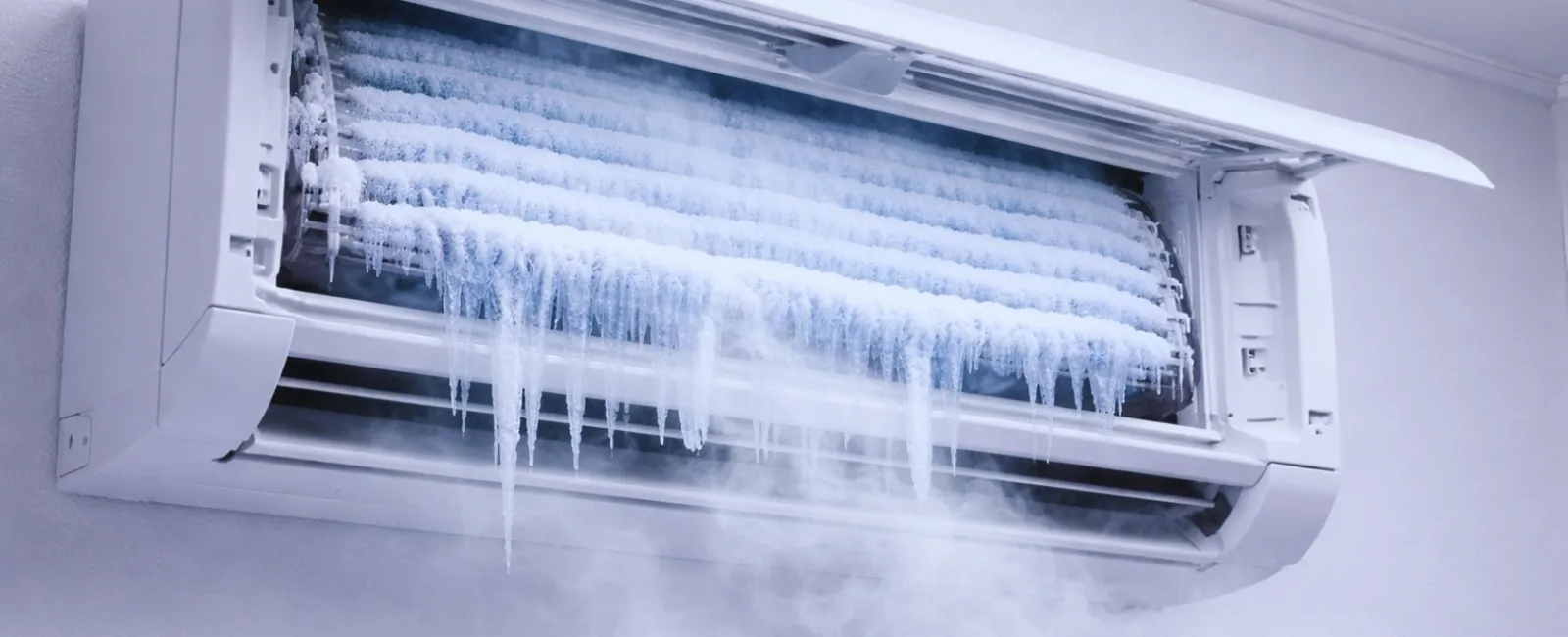
It seems impossible. Your air conditioner is supposed to cool your home, not turn into a block of ice. But there it is: frost creeping along the copper refrigerant lines, or worse, a solid layer of ice coating the evaporator coil inside your air handler. Your system is running constantly, yet your house feels warmer than ever.
A frozen evaporator coil is one of the most common air conditioning problems homeowners face, especially during North Georgia's humid summers. While it might look dramatic, what's happening inside your system follows a predictable pattern. Understanding that pattern can help you recognize when something is wrong and, more importantly, when it's time to call for professional AC repair.
How Your Evaporator Coil Is Supposed to Work
The evaporator coil is the component that actually cools the air in your home. It's typically located inside your air handler or, in many North Georgia homes, mounted directly above or alongside your furnace. As your system runs, cold refrigerant flows through the coil while your blower motor pushes warm indoor air across it.
Here's where the magic happens: the refrigerant inside the coil absorbs heat from the air passing through it. That cooled air then travels through your ductwork and into your living spaces. Meanwhile, the now-warm refrigerant travels outside to the condenser unit, releases that heat, and cycles back to do it all over again.
Under normal operating conditions, the evaporator coil stays cold (around 40°F) but not freezing. The constant flow of warm air across the coil keeps it from dropping below freezing, even as condensation naturally forms on its surface. That condensation drips into a drain pan and exits your home through a condensate line.
When something disrupts this delicate balance, the coil temperature can drop below 32°F. That's when condensation starts to freeze, and problems begin.
Why Evaporator Coils Freeze: The Science Behind the Ice
A frozen evaporator coil isn't random. It happens when the coil gets too cold, with insufficient warm air passing over it to maintain proper temperature balance. Several underlying issues can trigger this chain reaction.
Restricted Airflow
This is the most common culprit. When warm air can't reach the evaporator coil in sufficient volume, the refrigerant inside continues to cool without anything to absorb. The coil temperature plummets, and ice begins to form.
Airflow restrictions can come from obvious sources, such as a clogged air filter that hasn't been changed in months. But they can also stem from closed or blocked supply vents, furniture pushed against return air grilles, or collapsed ductwork you can't see. In some cases, the blower motor inside your furnace or air handler may be failing, unable to move air at the proper volume, even when everything else looks fine.
Low Refrigerant Levels
Your air conditioning system is a closed loop. Refrigerant doesn't get "used up" like fuel in a car. If your refrigerant level is low, it means there's a leak somewhere in the system.
When refrigerant levels drop, the remaining refrigerant expands more than it should inside the evaporator coil. This causes the coil to cool below normal, often enough to freeze the moisture on its surface. Low refrigerant also makes your system work harder to cool your home, which can lead to other problems down the road.
Dirty Evaporator Coil
Over time, dust, pet dander, and other airborne particles can accumulate on the evaporator coil itself. Even a thin layer of buildup acts as insulation, preventing the coil from efficiently absorbing heat from the air. The result is the same as restricted airflow: the coil gets too cold, and ice forms.
This is one reason annual AC maintenance matters so much. A technician can clean the coil and catch buildup before it causes problems.
Blower Motor Problems
The blower motor is responsible for pushing air across the evaporator coil and distributing conditioned air throughout your home. When the motor starts to fail, it may run at reduced speed or cycle on and off erratically. Either way, the coil doesn't get the steady airflow it needs.
Blower motor issues often show up gradually. You might notice weaker airflow from your vents before the coil ever freezes. If your system seems to be losing power over time, it's worth having a technician inspect the blower motor and air handler components before a frozen coil becomes your bigger problem.
Running the AC When It's Too Cool Outside
Air conditioners are designed to operate within a specific temperature range. When outdoor temperatures drop below about 60°F at night, the refrigerant pressure in your system changes. Combined with cooler indoor air, this can push evaporator coil temperatures below freezing.
This is less common in North Georgia's summer months, but it can happen during spring and fall when daytime highs warrant cooling but nighttime temperatures dip significantly.
Signs Your Evaporator Coil May Be Frozen
You won't always see the ice directly, especially since the evaporator coil is usually hidden inside your air handler or furnace cabinet. However, several warning signs can alert you to the problem.
Warm air coming from your vents is often the first clue. Your system is running, but it's not cooling. You might also notice frost or ice forming on the copper refrigerant lines running to your outdoor unit. These lines are visible, and ice on them is a clear indicator of trouble inside.
Water around your indoor unit can signal a frozen coil that's starting to thaw. As ice melts, it can overwhelm the drain pan and leak onto your floor. If you see puddles near your furnace or air handler, check for ice as a possible cause.
Your system running constantly without reaching the set temperature is another red flag. When ice blocks the coil, your AC can't transfer heat effectively, so it just keeps running and running without ever satisfying the thermostat.
What Happens If You Ignore a Frozen Coil
A frozen evaporator coil isn't just an inconvenience. Left unaddressed, it can cause serious damage to your air conditioning system.
The biggest risk is compressor failure. The compressor is the heart of your AC system and the most expensive component to replace. When ice blocks the evaporator coil, liquid refrigerant can flow back to the compressor rather than vapor. Compressors are designed to compress gas, not liquid. Liquid entering the compressor, known as "liquid slugging," can destroy the component within minutes.
Repeated freeze-thaw cycles can also damage the evaporator coil itself. Ice expansion stresses the delicate aluminum fins and copper tubing. Over time, this can lead to refrigerant leaks that require coil replacement.
If you suspect your evaporator coil is frozen, the safest approach is to turn off your system and call a professional AC repair service. Running a frozen system risks turning a repairable problem into an expensive replacement.
What a Professional Does to Diagnose and Fix the Problem
When a technician arrives to address a frozen evaporator coil, the first step is letting the ice thaw completely. This typically takes a few hours with the system off and the fan running. Trying to chip away ice or speed up the process can damage the coil.
Once the coil is clear, the real diagnostic work begins. The technician will check your air filter and inspect the ductwork for restrictions. They'll measure airflow across the coil and test the blower motor's performance. If airflow checks out, attention turns to refrigerant levels.
Checking refrigerant requires specialized equipment and training. If levels are low, the technician needs to find and repair the leak before adding more refrigerant. Simply "topping off" refrigerant without fixing the leak means you'll face the same problem again, often within weeks.
The technician will also inspect the evaporator coil itself for dirt buildup and clean it if necessary. They may examine the condensate drain line to ensure that melting ice drains properly. In some cases, thermostat settings or a malfunctioning thermostat can contribute to freezing, so that gets checked too.
If the blower motor is underperforming, furnace and air handler repair may be necessary to restore proper airflow. A failing motor won't improve on its own, and replacing it before it dies completely can prevent future freeze-ups.
When to Call for Help
If you notice ice on your AC system, start by turning off the cooling and switching the fan to "on" to help thaw the coil. Check your air filter. If it's clogged, replace it. Make sure all supply and return vents are open and unobstructed.
Once the system has thawed (give it at least two to three hours), you can try running it again. If the coil freezes again within a day or two, or if you couldn't identify an obvious cause like a dirty filter, it's time to call a professional. Repeated freezing indicates an underlying issue that won't resolve on its own.
At MR. HVAC, we've helped homeowners across Canton, Woodstock, Roswell, and Alpharetta diagnose and repair frozen evaporator coils. Whether the problem stems from a refrigerant leak, a failing blower motor, or a coil that needs cleaning, our technicians have the tools and training to identify the cause and fix it right.
If your AC is showing signs of freezing or you're dealing with warm air and rising humidity, don't wait for the problem to damage your compressor. Call MR. HVAC for heating and cooling repair you can trust.


