
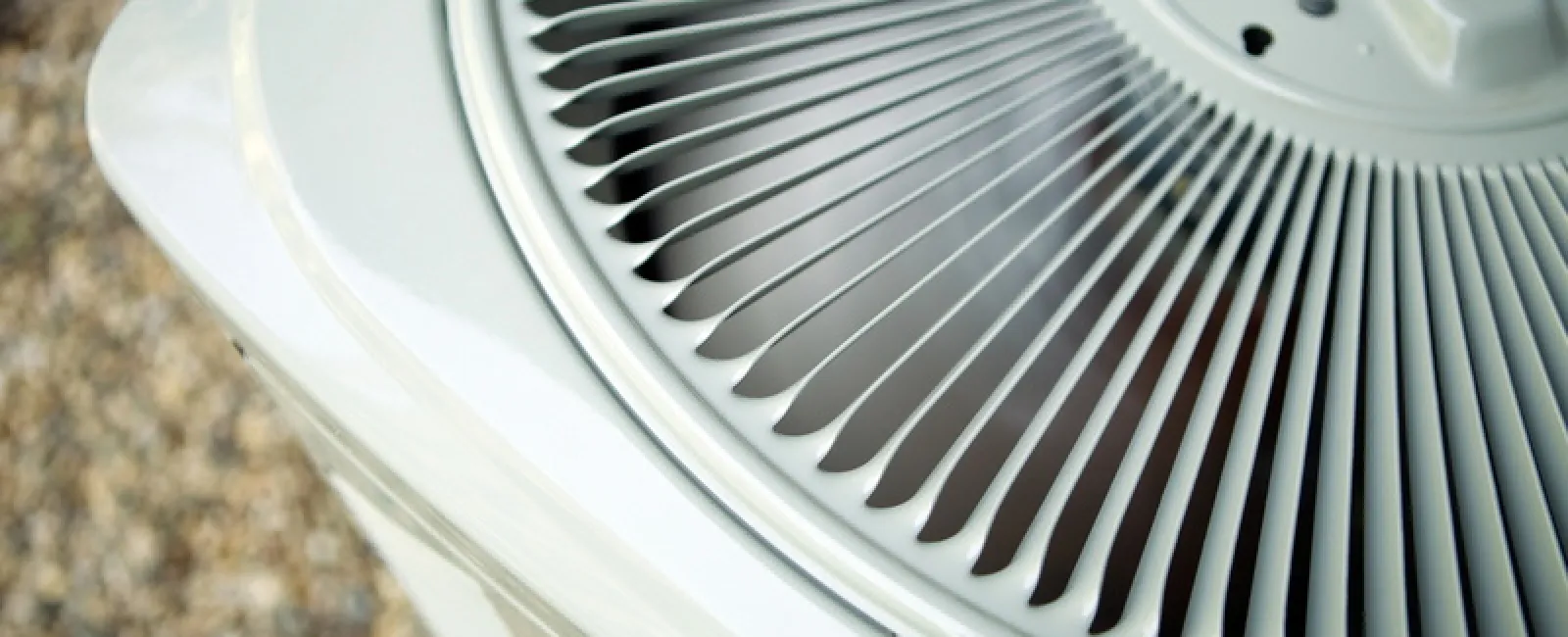
AC capacitors lose capacitance gradually over several cooling seasons, so the first bad AC capacitor symptoms are a one-second startup delay and a brief hum from the outdoor unit, not a system that refuses to run. During that slow decline the compressor pulls high startup current on every cycle, and that is where the expensive damage builds. The signs below run from early to late, followed by what a technician measures to confirm the capacitor is actually the problem.
What the Capacitor Does in Your Outdoor Unit
The capacitor is a cylindrical component mounted inside the condenser's electrical compartment. It stores a charge while the system is off and releases it the moment the thermostat calls for cooling, giving the compressor and condenser fan motor the torque they need to overcome their resting resistance and start spinning.
Most residential systems in Canton, Woodstock, Roswell, and Alpharetta use a dual run capacitor, a single can with three terminals that serves both the compressor and the fan. Some units add a separate start capacitor for extra startup torque. Either way, a capacitor below its rated microfarad value leaves the motors starting on insufficient power, and they strain every time they do.
Early Bad AC Capacitor Symptoms
The earliest signs are easy to dismiss because the house still gets cool. The outdoor unit takes a second or two longer to kick on after the thermostat clicks, which means the capacitor is charging and discharging more slowly than it should. A healthy system starts almost silently, so a short hum or buzz from the condenser right before the compressor engages is the motor waiting for enough energy to turn over.
Heat exposes a weak capacitor faster than anything else. Capacitors lose capacitance as their internal temperature rises, so a unit that starts reliably on a 78-degree morning may hesitate, cycle oddly, or run sluggishly at 3 p.m. in July. If your AC only acts up during the hottest stretch of the day, the capacitor is one of the first things a technician will test.
Symptoms of a Capacitor That Is Clearly Failing
Hard starting is the most recognizable mid-stage symptom. The compressor tries to start, fails, and tries again, and you hear repeated clicking from the outdoor unit as the contactor pulls in each time. Every failed attempt pushes locked-rotor amperage through the compressor windings, generating heat that breaks down winding insulation. This is the point where AC repair stops being optional, because each cycle is doing real damage.
A capacitor can also fail unevenly. It may have enough charge left to start the condenser fan but not the compressor, so the fan spins, air moves through the ducts, and nothing gets cooled because refrigerant never circulates. From inside the house the warm air is the only clue.
Short cycling is the other common pattern. The run capacitor cannot hold the compressor at steady operation, current draw climbs, and the compressor's internal overload trips it off mid-cycle. A few minutes later it restarts, and the cycle repeats. Since startup is the hardest moment in a compressor's life, a short-cycling system with a weak capacitor is hard-starting several times an hour.
Signs of Complete Capacitor Failure
When the capacitor has no usable charge left, the indoor blower runs but the outdoor unit does nothing: no hum, no click, no fan. Some systems trip the breaker instead, because a compressor that cannot start keeps drawing three to five times its running amperage until the breaker opens. Resetting it repeatedly forces that current through the windings again and again.
A burning or hot electrical smell from the condenser means the capacitor has ruptured or the compressor motor has overheated. Shut the system off at the thermostat and the disconnect and call for emergency AC repair rather than restarting it. A failed capacitor often shows physical evidence as well, and you can spot these through the access panel without touching anything:
- A bulging or domed top on the capacitor can
- Oily residue on the can or the floor of the compartment
- Cracks in the housing or corroded, discolored terminals
- Scorch marks on the wiring or the contactor next to it
A capacitor can also fail electrically while looking perfectly normal, so a clean visual inspection does not clear it.
How to Tell if Your AC Capacitor Is Bad for Sure
Confirming a bad capacitor takes a meter, not a guess. With power off at the disconnect and the capacitor safely discharged, a technician measures its capacitance and compares it to the rating printed on the label. Manufacturers allow a tolerance of about 6 percent in either direction, and a capacitor that has drifted more than 10 percent below its rating is weak enough to cause starting problems even though it still holds some charge.
The test does not stop at the capacitor. The technician checks compressor amp draw at startup and during steady operation to see whether the motor has been working against electrical starvation, inspects the contactor for pitting from repeated hard starts, and looks for heat damage at the wire connections. This is how you learn whether a new capacitor solves the problem or whether the compressor is already on its way out.
Do not test or replace a capacitor yourself. Even with the breaker off, a run capacitor holds a charge that can deliver a serious shock, and it has to be discharged across the terminals with an insulated tool before anyone touches it. Capacitors typically last 10 to 20 years in mild climates, but heat shortens that considerably, and a system can technically keep running on a weak one for weeks. Each of those weeks is paid for in compressor life.
Why Running on a Weak Capacitor Wears Out the Compressor
The compressor is the component that decides whether an aging system is worth keeping, and it fails when it is forced to work harder than its design allows. A weak capacitor does exactly that. Every hard start heats the copper windings, and heat is what degrades the varnish insulation between them. Once that insulation breaks down, the windings short internally and the compressor cannot be repaired, only replaced.
Homeowners who replace a capacitor the first time a technician flags it as weak routinely get several more years out of the compressor. Homeowners who wait until the outdoor unit goes silent often find the compressor was damaged along the way, turning a quick electrical repair into a decision about AC replacement.
Why Capacitors Fail Faster in North Georgia
Condensers in Cherokee County and metro Atlanta sit in direct sun through summers that regularly push past 95 degrees, and the electrolyte inside a capacitor degrades faster the hotter it runs. Systems that cycle almost continuously through July and August put the most hours on the capacitor at exactly the temperatures that shorten its life.
Capacitor testing is a standard part of a spring AC tune-up, and catching a weak reading in April means the swap happens on a mild day instead of during a heat wave when every repair schedule in the area is full.
Get the Capacitor Tested Before the Compressor Pays for It
Delayed starts, humming before the compressor engages, trouble on hot afternoons, hard starting, random shutdowns, or warm air from a running system all point to a capacitor that should be measured now, not after it fails. MR. HVAC technicians test capacitor performance, check compressor amp draw, and identify any damage that has built up from running on a weak component. Schedule service or call (770) 213-4111 to get the outdoor unit checked.


