
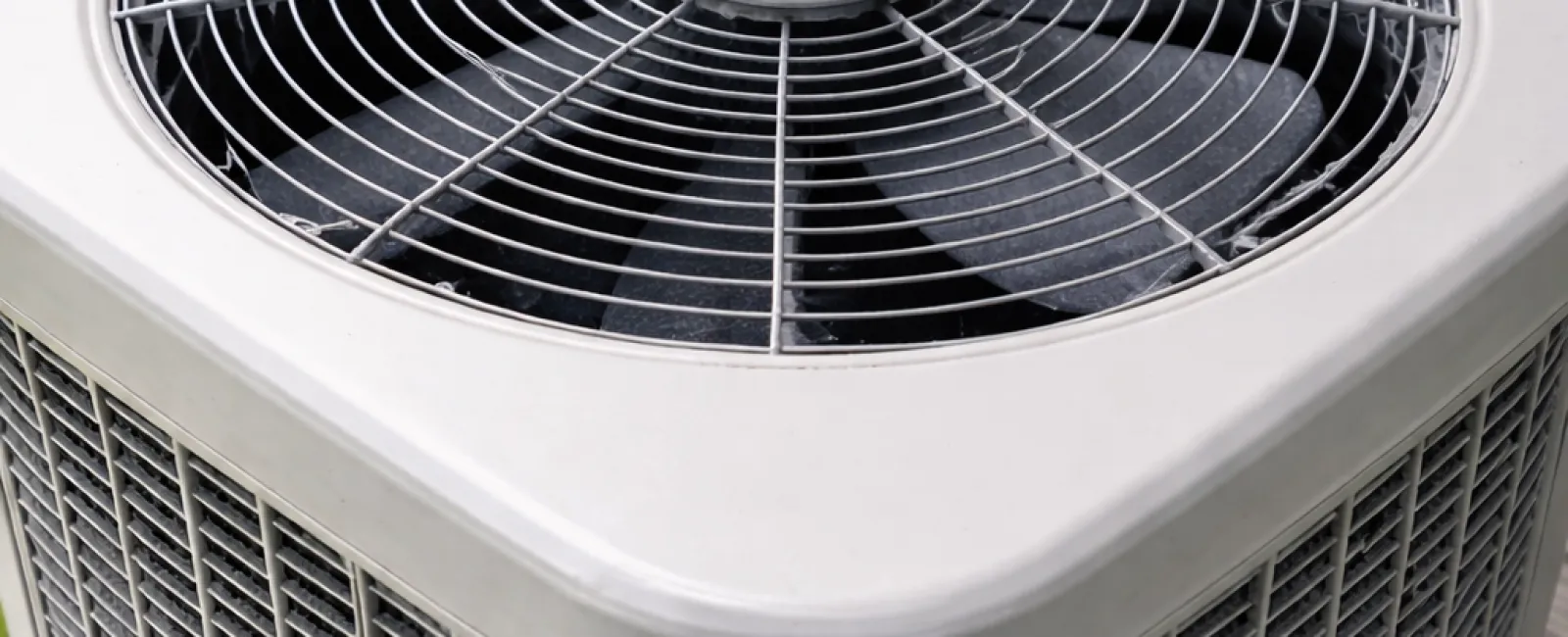
You walk outside to check on your air conditioner and notice something alarming: the fan on top of the outdoor unit isn't moving. Maybe you hear a humming sound, or maybe the unit is completely silent. Either way, something is clearly wrong.
What you might not realize is that every minute your AC runs with a non-spinning fan, damage is accumulating inside the system. The outdoor fan exists for one critical purpose: to pull air across the condenser coils and release the heat your system extracted from inside your home. Without that airflow, heat has nowhere to go. And when heat builds up, your compressor pays the price.
Understanding what causes a condenser fan to stop spinning can help you recognize the severity of the situation. More importantly, it can help you avoid the kind of catastrophic failure that turns a manageable repair into a conversation about full system replacement.
Why the Outdoor Fan Matters More Than You Think
Your air conditioning system works by absorbing heat from the air inside your home and moving it outside. The indoor evaporator coil captures the heat, and the refrigerant carries that thermal energy to the outdoor condenser coil. But the condenser coil can only release that heat if air is flowing across it.
That's the fan's job. When it spins, it pulls outdoor air through the condenser coils, allowing the refrigerant to dump its heat load and cycle back inside to collect more. When the fan stops, the heat stays trapped in the system.
Within minutes of a fan failure, temperatures inside the outdoor unit begin to climb. The compressor, which is essentially a pump for the refrigerant, begins working under conditions it wasn't designed for. Compressors can tolerate brief periods of high heat, but extended exposure causes internal damage. Lubricants break down. Windings overheat. Bearings wear prematurely. And once a compressor fails, you're often looking at a repair bill that approaches the cost of a new system.
This is why a non-spinning fan isn't something to monitor or wait out. It's a signal that your system needs immediate attention from a qualified AC repair technician.
What Causes an AC Fan to Stop Spinning
Several components can fail, leaving your outdoor fan motionless. Each has its own telltale signs, and each presents different implications for your system's health.
Failed Capacitor
The capacitor is one of the most common reasons for a non-spinning condenser fan, and it's also one of the most misunderstood components in an AC system. Think of it as a rechargeable battery that provides a burst of energy to start the fan motor spinning. Once the motor is running, the capacitor continues to supply a steady electrical charge, keeping it running.
Capacitors degrade over time, and heat accelerates that degradation. During the summer, your outdoor unit bakes in direct sunlight while generating its own heat. The capacitor sits inside that hot cabinet, absorbing punishment season after season. Eventually, it loses the ability to hold a charge.
When a capacitor fails, the fan motor doesn't receive the electrical boost it needs to start. You might hear a humming or buzzing sound from the unit as the motor tries and fails to spin. Some homeowners notice they can manually push the fan blade to start it, which is a classic sign of a weak or failed capacitor. However, this is not a solution; it is only a temporary workaround that risks further damage.
Capacitor replacement is a straightforward repair when handled by a professional, but it involves high-voltage electrical components that can cause serious injury if mishandled.
Burned Out Fan Motor
The fan motor itself can fail, especially in older systems or units that haven't received regular maintenance. Motors contain bearings that allow the shaft to spin freely. Over the years of operation, these bearings wear down. When they fail, the motor seizes or runs with excessive friction, generating heat until the motor windings burn out.
A failing motor often gives warning signs before it dies completely. Grinding or squealing noises during operation suggest bearing problems. Intermittent operation, where the fan works sometimes but not others, can indicate a motor overheating and shutting down under thermal protection.
Once a motor burns out, replacement is the only option. Motor replacement costs more than a capacitor, but it's still far less than the cost of compressor damage. Acting quickly when motor symptoms appear can prevent cascading failures that turn a single-component repair into a system-replacement discussion.
Contactor Failure
The contactor is an electrical relay that controls power flow to the compressor and condenser fan motor. When your thermostat calls for cooling, it sends a low-voltage signal to the contactor. The contactor responds by closing a switch that allows high-voltage power to reach the outdoor components.
Contactors have metal contact points that physically touch to complete the circuit. Over thousands of cycles, these points can pit, corrode, or weld together from electrical arcing. A failed contactor might prevent the fan from receiving power at all, or it might stick in the closed position, preventing the system from shutting off.
You might hear a chattering or buzzing sound from the contactor area if it's failing to close properly. This indicates the electromagnetic coil is trying to pull the contacts together, but can't quite make a solid connection. Contactor problems require professional diagnosis because they involve the same high-voltage circuits as the capacitor. If you notice unusual sounds from your outdoor unit, scheduling air conditioning service promptly can prevent further electrical damage.
Electrical Issues
Sometimes the fan stops spinning because it simply isn't receiving power. A tripped circuit breaker is the most obvious culprit, but electrical problems can also originate inside the unit itself. Loose wiring connections, corroded terminals, and damaged wires can all interrupt power flow to the fan motor.
Electrical problems often stem from age and exposure. The outdoor unit sits in the elements year-round, experiencing temperature swings, humidity, and occasional water intrusion. Connections that were tight during installation can loosen over time. Wire insulation can crack, exposing copper to corrosion.
If your outdoor unit has power but the fan doesn't spin, the problem likely lies somewhere in the chain between the electrical panel and the motor itself. Tracing that chain requires electrical testing equipment and knowledge of AC system wiring.
Debris and Mechanical Obstruction
Not every fan failure is electrical. Sometimes the fan physically cannot spin because something is blocking it. Sticks, leaves, and other debris can fall into the unit and jam the fan blades. In rare cases, small animals find their way into outdoor units and create obstructions.
Mechanical blockages are usually obvious if you look at the unit. The fan blades may be visibly tangled with debris, or you might see something lodged in the housing. However, attempting to clear a blockage yourself carries risks. The fan blade edges can be sharp, and the unit may still have power even if the fan isn't spinning.
The Compressor Connection
Every cause of fan failure has one common consequence: if the system continues to run without the fan, the compressor overheats. This is worth repeating because compressor replacement is one of the most expensive repairs in residential HVAC.
The compressor is a sealed unit containing the motor and pump mechanism that circulates refrigerant through the system. When it overheats, the internal motor windings can be damaged. The lubricating oil can break down, leading to bearing failure. In severe cases, the compressor can seize completely.
Modern air conditioners have safety switches designed to shut down the compressor when temperatures get too high. These high-pressure cutouts and thermal overloads provide some protection, but they're not foolproof. A system cycling on and off due to repeated overheating still accumulates damage with each cycle. And if a safety switch fails, the compressor runs until it destroys itself.
This is why you should never continue running an air conditioner with a non-spinning fan. Turn the system off at the thermostat and schedule professional AC service immediately.
What Happens During a Service Call
- When a technician arrives to diagnose a non-spinning fan, they'll start by testing the electrical components that control the fan motor. Using specialized meters, they can measure capacitor strength, motor winding resistance, and voltage at various points in the circuit. This testing identifies exactly which component has failed.
- If the capacitor is weak or dead, replacement is typically quick. The technician will verify that the new capacitor matches the original's specifications and test the system to ensure proper operation.
- Motor replacement takes longer and costs more, but a skilled technician can complete the job in a single visit for most residential systems. After installation, they'll verify that the motor is drawing the correct amperage and that the system is cooling properly.
- Contactor replacement and electrical repairs vary in complexity depending on what's wrong. The technician may need to trace wiring, repair connections, or replace multiple components if the problem has been developing over time.
Regardless of the specific repair, the technician should also check the compressor for signs of overheating damage. Catching heat-related wear early can prevent future failures.
When Repair Becomes Replacement
Sometimes a fan failure is the final straw for an aging system. If your air conditioner is 12 to 15 years old and experiencing its second or third significant repair, it may make more financial sense to invest in a new system rather than continuing to repair failing components.
A technician can help you weigh the costs. If the compressor has already sustained damage from running without the fan, repair costs escalate quickly. Adding a new motor, capacitor, and contactor to a system with a compromised compressor often isn't worth the investment when those repair dollars could go toward efficient new equipment with a full warranty.
Don't Let a Stopped Fan Become a Destroyed Compressor
If your outside AC unit fan isn't spinning, time matters. The longer the system runs without proper airflow, the more likely you are to face expensive compressor damage. Turn off the system, check that nothing obvious is blocking the fan, and call for service.
At MR. HVAC, we help homeowners throughout Canton, Woodstock, Roswell, and Alpharetta diagnose and repair AC problems before they escalate. Whether it's a failed capacitor, worn motor, or electrical issue, our technicians identify the cause and get your system running safely.
A stopped fan is your AC asking for help. Call MR. HVAC for prompt AC repair service and protect your system from the damage that comes with delay.


