
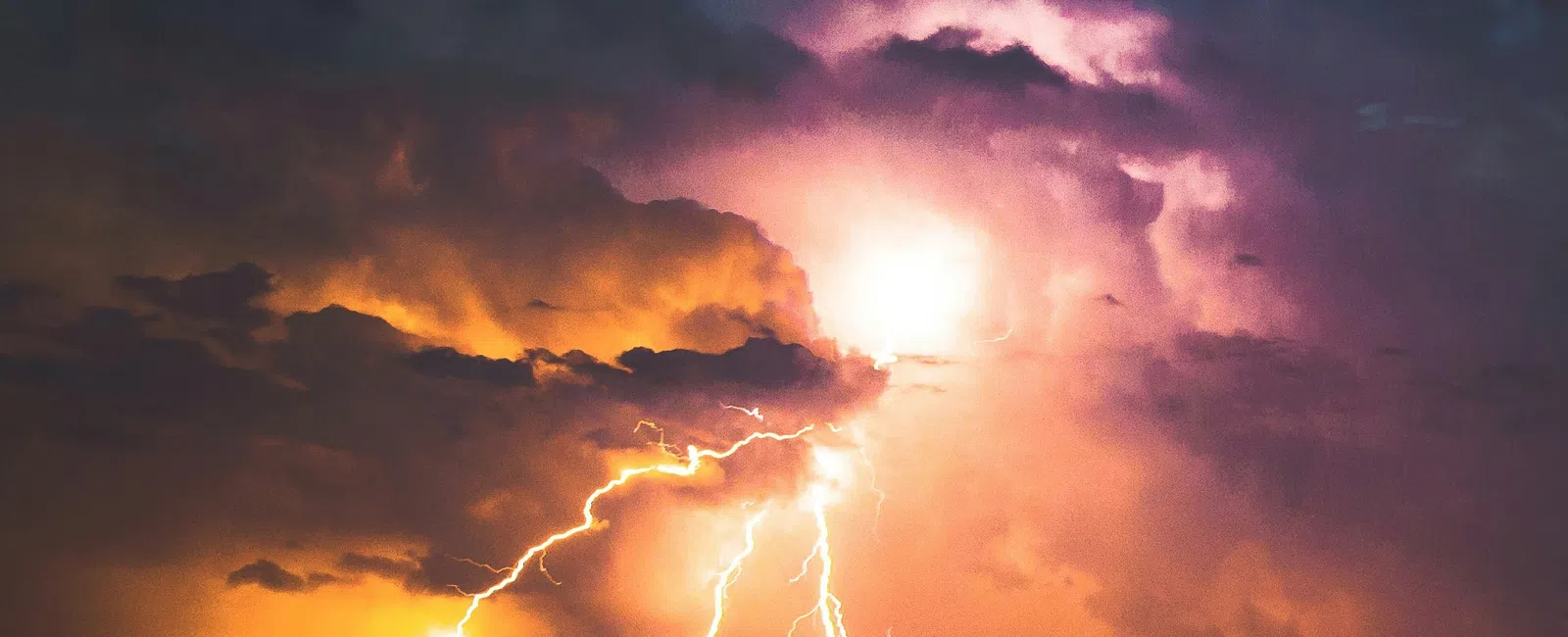
North Georgia summers come with a familiar soundtrack: afternoon thunder, a flicker of the lights, and that split second where everything in the house resets. Those storms are hard on your air conditioner, and the damage is not always obvious. A power surge can quietly cook the electronics inside your system long before you notice a problem. That is where an AC surge protector earns its keep, and the right protection keeps a bad afternoon from turning into a full system replacement.
Why North Georgia Weather Is Tough On Air Conditioners
Cherokee, Cobb, and Fulton counties sit in one of the more storm-prone corners of the Southeast. Summer heat builds moisture, moisture builds thunderstorms, and those storms bring lightning and unstable power. Your AC is working its hardest on exactly the days the weather turns. A nearby lightning strike does not have to hit your home to cause harm. It can send a spike through the power lines, the ground, or even your cable and thermostat wiring. Add in the brownouts and quick outages that come with summer grid strain, and your outdoor unit takes a beating most homeowners never see.
What Actually Happens During A Power Surge
A surge is a sudden jump in voltage that lasts a tiny fraction of a second. Your AC is built to run on a steady, predictable flow of electricity. When that flow spikes, the extra energy has to go somewhere, and it burns through the most sensitive parts first. Modern systems are more exposed than older ones. Today's units rely on circuit boards, sensors, and variable-speed electronics that behave much like a computer, and, like any computer, they do not react well to a jolt of extra power.
Most damaging surges don't come from lightning at all. Studies of home electrical systems have found that the vast majority of events start inside your home, generated every time a major appliance cycles on and off. Every time a large appliance kicks on, it creates a small spike. Your AC is one of the biggest offenders, because a compressor can pull six to eight times its normal current just to start up. Those small hits add up over a season and wear your electronics down from the inside.
Why The Compressor Takes The Hardest Hit
Think of the compressor as the heart of your air conditioner. It is the part that moves refrigerant and makes cold air possible, and it is the single most expensive component in the system. When a surge damages the compressor or the control board that runs it, you are often looking at a repair that rivals the unit's value. Sometimes the failure is instant. More often, repeated surges chip away at the windings and electronics until one hot afternoon the unit simply will not start. If you have ever dealt with a failing AC compressor, you know it is not a problem you want to meet twice.
Whole-Home Protection Is A Start, Not The Whole Answer
A whole-home surge protector at your electrical panel is a smart first line of defense, and we recommend one for every house. It does have a blind spot, though. Your outdoor condenser sits at the end of a long wire run from that panel, and that stretch of cable is an open door for surges that build along the way. A dedicated surge protector for your AC unit installs right at the equipment, where it can stop a spike before it reaches those costly electronics. The two work as a team: the panel guards the whole house, and the HVAC surge protector covers the unit that costs the most to replace.
How An AC Surge Protector Helps
An AC surge protector is a small device that a technician installs at your outdoor unit's disconnect. When voltage spikes, it absorbs or diverts that extra energy away from the compressor, capacitor, and control board. Homeowners who add one usually experience fewer storm-season breakdowns and get the full lifespan out of their system rather than losing it early. It is one of the lower-cost upgrades you can make, and it protects one of the highest-cost systems in your home. Because it ties directly into high-voltage equipment, surge protection installation is a job for a licensed technician, not a weekend project.
Signs Your AC May Have Taken A Surge Hit
Sometimes surge damage shows up right after a storm. Keep an eye out for these warning signs:
- An outdoor unit that stays silent after the power blinks
- A breaker that keeps tripping every time the system tries to start
- A blank or unresponsive thermostat
- burning smells or scorch marks near the condenser or control board
- Warm air blowing from the vents even though the system is running
If any of these show up, switch the system off at the thermostat and call a professional. Running a surge-damaged unit can turn a fixable problem into a much bigger one. This is exactly the kind of situation our emergency AC repair team handles throughout Georgia's storm season.
Protect Your AC Before The Next Storm Rolls In
At MR. HVAC, we have spent more than 25 years keeping north metro Atlanta families comfortable through hot, stormy summers. As a family-owned and operated company with a 5.0 Google rating, we can add surge protection to your system, check for existing storm damage, and get you ready before the next round of weather moves in. Serving Woodstock, Canton, Roswell, and the surrounding communities, we offer upfront pricing with no hidden fees, same-day service, and 24/7 emergency repair from licensed technicians. Call us today to schedule your professional AC service and keep one storm from costing you an entire system.


