
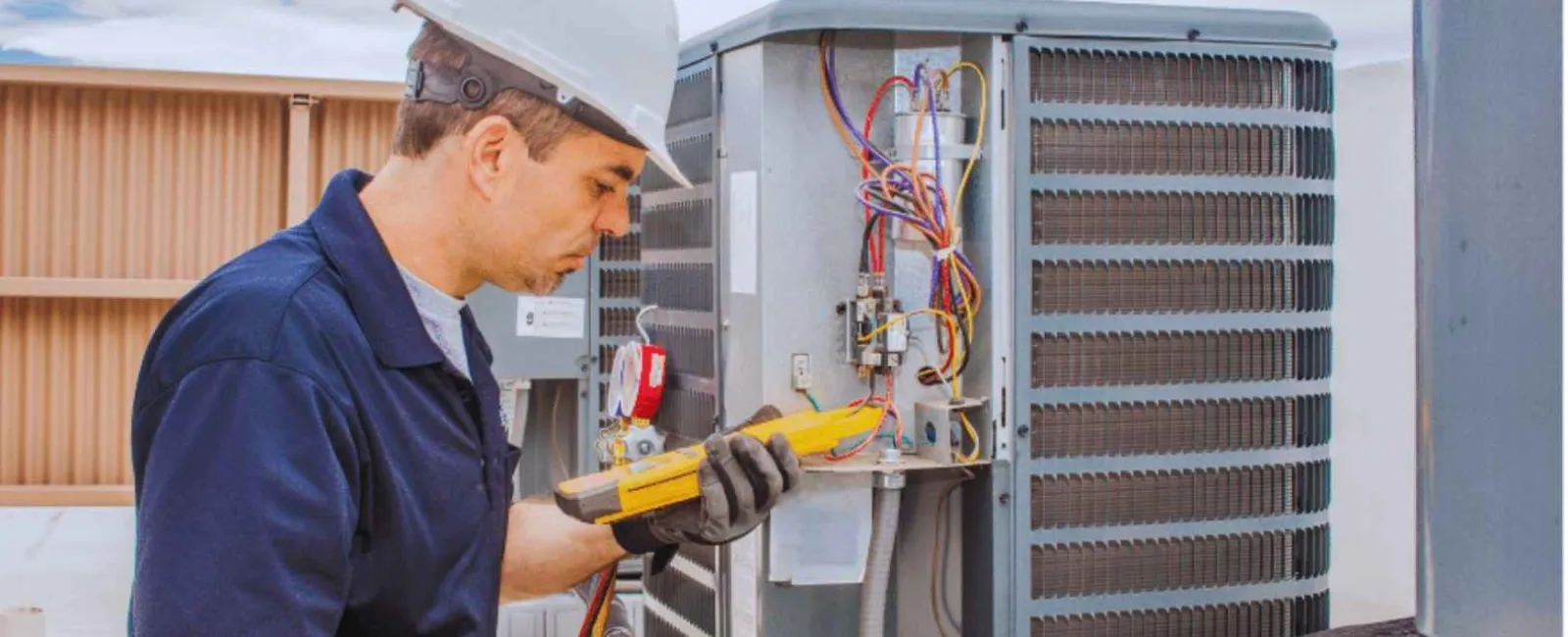
You set your thermostat, hear your indoor unit kick on, and wait for cool air that never comes. A quick check outside reveals the problem: your AC compressor is not turning on. The fan might be spinning, or the entire outdoor unit might be completely silent, but either way, no cooling is happening.
This is one of the most common air conditioning problems we see, especially during the brutal summer months when your system is working hardest. The compressor is essentially the heart of your cooling system, and when it won't start, your home heats up fast.
With over 25 years of experience, we've diagnosed thousands of compressor issues. The causes range from simple fixes you can check yourself to complex problems requiring professional AC repair. We will break down what's actually happening when your AC compressor won't turn on and help you understand what comes next.
What Your AC Compressor Actually Does
Before diving into why your compressor isn't working, it helps to understand what this component does and why it matters so much to your comfort.
The compressor sits inside your outdoor condensing unit and serves as the pump that circulates refrigerant through your entire cooling system. When operating normally, it compresses low-pressure refrigerant gas into high-pressure gas, which then travels to the condenser coils, where heat is released outside. The refrigerant then flows back inside to the evaporator coils, absorbs heat from your indoor air, and the cycle repeats.
Without a functioning compressor, refrigerant can't circulate. Your indoor blower might push air through the vents, but that air won't be cooled because no heat transfer is occurring. This is why a compressor that won't turn on means zero cooling capacity, regardless of what your thermostat says.
The compressor is also the most expensive single component in your air conditioning system. Understanding why it's not turning on can help you avoid unnecessary replacement costs and make informed decisions about air conditioning repair versus replacement.
What to Check Before Calling for Service
While most compressor issues require professional diagnosis, there are a few things you can safely check yourself that might save a service call.
- First, verify your thermostat settings. This sounds basic, but we receive calls every summer about the thermostat being accidentally set to "heat" or "off." Make sure it's set to cool, and the temperature is set at least 3-5 degrees below the current room temperature.
- Second, check your circuit breakers. Look for any tripped breakers in your electrical panel and reset them once. Also, check the disconnect box near your outdoor unit if your home has one.
- Third, inspect your air filter. A severely clogged filter restricts airflow enough to cause system shutdown. Replace it if it looks dirty and hasn't been changed in several months.
- Fourth, look at your outdoor unit. Clear away any debris, vegetation, or other objects that block airflow around the condenser. Make sure nothing is sitting on top of the unit.
If none of these steps get your compressor running, it's time to call a professional.
8 Common Reasons Your AC Compressor Won't Turn On
Based on the thousands of service calls we've handled over the years, here are the most frequent causes of compressor failure, ranked by how often we encounter them.
1. Failed Capacitor (30% of Cases)
The capacitor is the number one reason we see AC compressors not kicking on. This small cylindrical component stores and releases electrical energy, giving your compressor the boost it needs to start. Think of it like a battery that provides the initial surge of power required to get the compressor motor spinning.
Capacitors degrade over time, especially in hot climates where outdoor units bake in summer heat. When a capacitor fails, you'll often hear a humming or clicking sound from the outdoor unit as the compressor tries to start but fails. In some cases, the condenser fan runs normally while the compressor stays silent.
A failed capacitor is one of the more affordable repairs, but it requires proper diagnosis. Capacitors store dangerous amounts of electricity even when the system is off, so this isn't a DIY repair. A technician can test the capacitor and replace it during a single service visit.
2. Tripped Circuit Breaker or Blown Fuse (20% of Cases)
Sometimes the simplest explanation is the right one. Your AC compressor requires significant electrical power to operate, and various issues can cause the circuit breaker to trip or a fuse to blow.
Check your electrical panel for a tripped breaker dedicated to your air conditioning system. Many homes have separate breakers for the indoor and outdoor units. If you find a tripped breaker, reset it once. If it trips again immediately or within a few minutes of the system starting, don't keep resetting it. Repeated tripping indicates an underlying electrical problem that needs professional diagnosis.
Some older homes also have a disconnect box mounted on the exterior wall near the outdoor unit. This box contains fuses that can blow and cut power to the compressor. A licensed HVAC technician can check these fuses and determine why they failed.
3. Contactor Failure (15% of Cases)
The contactor is an electrical relay that controls power flow to your compressor. When your thermostat calls for cooling, it sends a low-voltage signal to the contactor, which then closes and allows high-voltage power to reach the compressor and condenser fan motors.
Contactors wear out over time. The electrical contacts can become pitted or burned, preventing a solid connection. You might hear a chattering or buzzing sound from the outdoor unit when the contactor is failing. In other cases, the contactor simply won't engage, leaving the compressor without power.
A technician can visually inspect the contactor for damage and test it with a multimeter. Replacement is relatively straightforward and much less expensive than compressor replacement.
4. Low Refrigerant Triggering Safety Shutdown (12% of Cases)
Your air conditioning system is designed with safety switches that protect the compressor from damage. One of these is the low-pressure switch, which monitors refrigerant levels. If refrigerant leaks out of the system and pressure drops too low, this switch cuts power to the compressor to prevent it from running without adequate lubrication.
Low refrigerant is always caused by a leak somewhere in the system. Refrigerant doesn't get "used up" during normal operation. If your system is low, a leak needs to be found and repaired before adding more refrigerant.
Signs that low refrigerant might be your issue include gradually declining cooling performance over weeks or months, ice formation on the refrigerant lines or indoor coils, and hissing sounds near the outdoor unit. An AC maintenance visit includes checking refrigerant levels and can catch leaks before they cause compressor problems.
5. Dirty Condenser Coils Causing Overheating (10% of Cases)
The condenser coils surrounding your outdoor unit release heat absorbed from inside your home. When these coils become caked with dirt, grass clippings, cottonwood fluff, or other debris, heat can't escape efficiently. This causes system pressure and temperature to rise until the high-pressure safety switch shuts down the compressor.
You can visually inspect your condenser coils by looking through the metal fins on the outdoor unit. If you see significant buildup blocking airflow, the coils need cleaning. While you can gently rinse the unit's exterior with a garden hose, thorough coil cleaning often requires removing panels and using specialized cleaning solutions.
Regular air conditioning tune-ups include cleaning the condenser coil, which helps prevent this problem and keeps your system running efficiently.
6. Thermostat or Control Board Issues (8% of Cases)
If your thermostat isn't communicating properly with your outdoor unit, the compressor won't receive the signal to turn on. This could be as simple as dead thermostat batteries, incorrect settings, or a thermostat that has lost its programming.
Start by checking the obvious: make sure your thermostat is set to "cool" mode, and the target temperature is lower than the current room temperature. Replace batteries if your thermostat uses them. Try turning the temperature down significantly to see if the system responds.
More complex issues involve the control board inside your air handler or furnace, which relays signals between the thermostat and outdoor unit. A technician can test voltage at various points in the system to determine where communication is breaking down.
7. Compressor Overload Protector Tripped (3% of Cases)
Compressors have a built-in thermal overload protector that shuts them down if they overheat. This can happen due to any of the issues mentioned above, restricted airflow from a dirty filter, or simply running too hard during extreme heat.
When the overload trips, the compressor won't restart until it cools down, which can take 30 minutes to several hours. If your compressor was running and then stopped working on a hot day, the overload may have tripped. Give it time to cool and see if it restarts.
However, if the overload keeps tripping repeatedly, there's an underlying problem causing the compressor to overheat. Continuing to run the system in this condition can cause permanent compressor damage.
8. Compressor Motor Failure (2% of Cases)
When the compressor motor itself fails, the unit typically needs to be replaced. This is the most expensive outcome, but fortunately, the least common when systems receive proper maintenance.
Compressor motors can fail due to electrical problems, lubrication loss from refrigerant leaks, contamination in the refrigerant lines, or simply age. Motors that are seizing often make grinding or screeching noises before failing completely.
When facing compressor replacement, you'll need to weigh repair costs against the age and overall condition of your system. If your air conditioner is more than 10-12 years old or has had multiple repairs, AC replacement might make more financial sense than installing a new compressor in aging equipment.
Why Professional Diagnosis Matters
Compressor problems can have multiple contributing factors, and misdiagnosis can lead to unnecessary expenses. For example, replacing a capacitor won't help if the real problem is a refrigerant leak that caused the low-pressure switch to trip. A technician needs to test multiple components systematically to identify the root cause.
Professional diagnosis also matters for safety reasons. Air conditioning systems involve high-voltage electricity, pressurized refrigerant, and rotating machinery. Capacitors can hold dangerous charges even when the system is off. Refrigerant requires EPA certification to be handled legally. These aren't areas where DIY repairs are appropriate.
When you call for service, a technician will typically check voltage at various points in the system, test capacitors and contactors, measure refrigerant pressures, inspect for visible damage, and verify thermostat communication. This systematic approach ensures the actual problem gets fixed, not just the most obvious symptom.
Preventing Future Compressor Problems
Most compressor failures are preventable with proper maintenance. The issues that kill compressors, including dirty coils, low refrigerant, and electrical problems, develop gradually and can be caught during routine service before they cause breakdown.
Schedule professional AC maintenance at least once a year, ideally in spring before the cooling season begins. Technicians will clean coils, check refrigerant levels, test electrical components, and identify worn parts before they fail completely.
Between service visits, change your air filter regularly, keep the area around your outdoor unit clear, and monitor changes in system performance. Gradual cooling decline, unusual sounds, or higher-than-normal energy bills often indicate problems developing.
Also consider the age of your equipment. Compressors in well-maintained systems typically last 12-15 years, though some fail sooner and others last longer. If your system is approaching this age range and requiring frequent repairs, planning ahead for new AC installation makes sense before an emergency replacement becomes necessary.
When Repair vs. Replacement Makes Sense
Not every compressor problem means you need a new air conditioner. Capacitor replacement, contactor replacement, and refrigerant leak repairs are all worthwhile investments in a newer system. However, the calculus changes with older equipment.
Consider replacement if your system is more than 12-15 years old, the compressor itself has failed, repair costs exceed 50% of replacement cost, you've had multiple significant repairs in recent years, or your system uses R-22 refrigerant (which is no longer manufactured).
Our family-owned team has been helping North Georgia homeowners make these decisions for over 25 years. We'll give you honest assessments of repair versus replacement options and help you choose what makes the most sense for your situation and budget.
Frequently Asked Questions
Why is my AC fan running, but the compressor won't turn on?
This typically indicates the outdoor unit is receiving power, but something is preventing the compressor, specifically, from starting. The most common causes are a failed capacitor, a tripped low-pressure switch due to low refrigerant, or a faulty contactor. A technician can test each component to identify the specific failure.
Can I run my AC if the compressor isn't working?
You can run the fan to circulate air, but you won't get any cooling. Running the system in this state won't cause additional damage, but it won't cool your home either. Some homeowners run just the fan at night to circulate cooler outdoor air through the house while waiting for repairs.
How long do AC compressors last?
With proper maintenance, AC compressors typically last 12-15 years. However, systems that don't receive regular maintenance, run with low refrigerant, or operate with dirty coils may experience compressor failure much sooner. Annual tune-ups are the best way to maximize compressor lifespan.
Why does my compressor turn on briefly then shut off?
This behavior, called short cycling, usually indicates that a safety switch is tripping. Common causes include low refrigerant triggering the low-pressure switch, overheating triggering the high-pressure switch, or electrical issues causing the overload protector to trip. The compressor is trying to run but can't sustain operation.
Is it worth replacing just the compressor?
This depends on the age and condition of your overall system. Compressor replacement in a system less than 8-10 years old with no other issues often makes sense. However, if the system is older or has had multiple repairs, the money spent on a new compressor might be better invested in a complete system replacement that includes warranty coverage for all components.


