
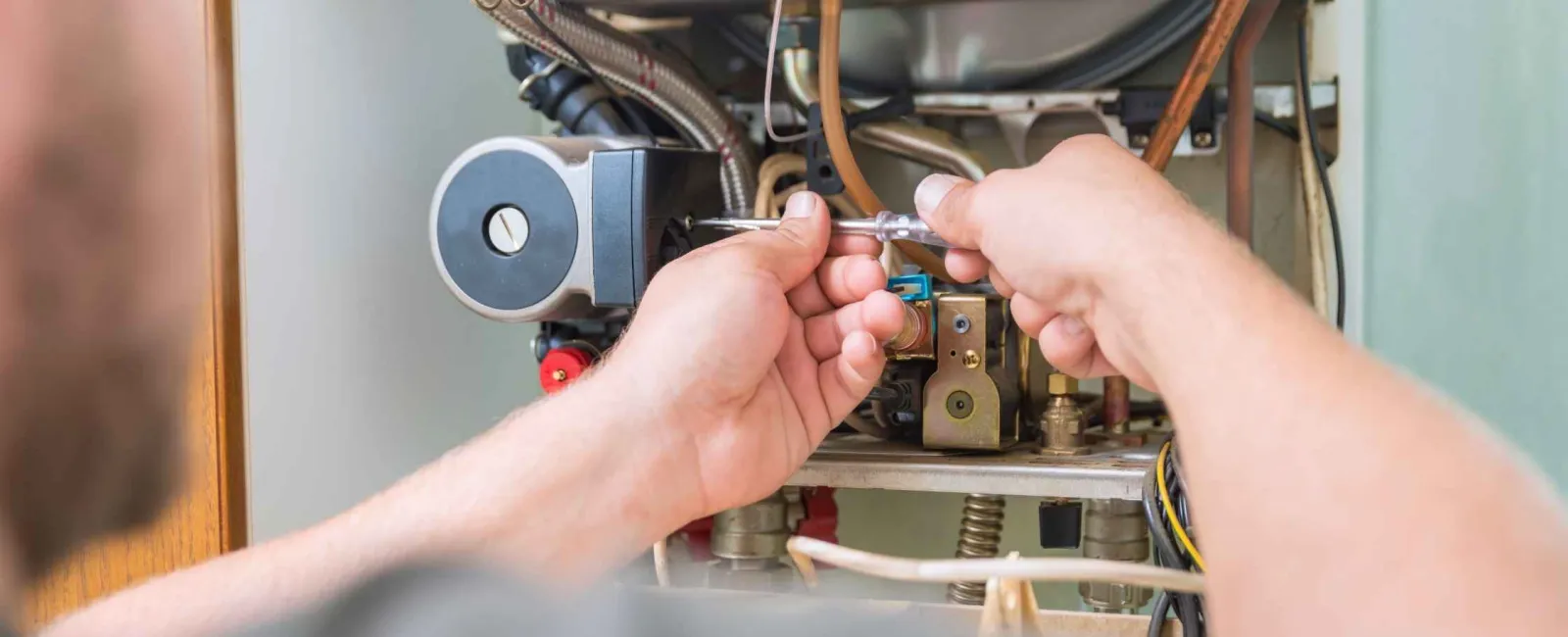
Most furnace problems come down to one of a handful of
familiar parts: the igniter, the flame sensor, the pressure switch, or the
blower motor. The control board is different. When it fails, it can make your
furnace behave like half a dozen different problems at once,
and no amount of resetting the thermostat will fix it.
If a technician has pointed to the control board as the
source of your heating issues, or if your furnace is doing something strange
that you cannot explain, here is what the component actually does and what the
symptoms of failure tend to look like.
What the Furnace Control Board Does
The control board is a circuit board located inside the
furnace cabinet, typically behind the lower access panel. It is the central hub
that coordinates every electrical function in the system. When the thermostat
sends a call for heat, the control board receives that
signal and tells everything else what to do next.
In a standard heating cycle, the control board sequences the
operation in a specific order: it activates the inducer motor first, waits for
confirmation from the pressure switch that proper airflow exists, then enables
the igniter, opens the gas valve, verifies ignition through the flame sensor,
and finally turns on the blower motor to distribute heat. Every one of these
steps is managed by the board.
On most modern furnaces, the control board also manages the
air conditioning side of the system when cooling runs. It monitors inputs from
multiple sensors simultaneously and will shut the system down or log an error
code if anything falls outside normal operating parameters.
The board also carries a set of diagnostic LED lights. When
something goes wrong, the lights flash a specific pattern that corresponds to
an error code. That code is a starting point for diagnosing the problem, though
interpreting it in context still requires a technician who
understands the system.
Symptoms of a Failing Furnace Control Board
Control board failures often produce symptoms that overlap with those of several other furnace problems. That is part of what makes them difficult
to diagnose without hands-on inspection. These are the patterns most commonly
associated with board failure.
The furnace will not start at all
If the thermostat is calling for heat but nothing happens,
no inducer motor spinning up, no igniter clicking, no response of any kind, the
control board may have lost the ability to receive or process the thermostat
signal. This can also be caused by a blown fuse on the board itself, which is a
simpler fix that a technician will check first.
The furnace starts but shuts off before the house reaches temperature
A board that intermittently fails may allow the furnace
to begin a heating cycle but drop a signal partway through, causing a premature
shutdown. This can look like short cycling, which is also caused by
overheating, a dirty filter, or a faulty flame sensor. A technician needs to
rule out those simpler causes before landing on the control board as the
culprit.
The blower fan runs continuously
The control board tells the blower when to turn on and off. If the board is sending a continuous run signal, the blower will
keep running even after the furnace stops heating and the house reaches the set temperature. A fan that runs without stopping is a common
symptom of board issues, though thermostat wiring problems can produce the same
result.
The furnace ignores thermostat commands
When the board's communication with the thermostat is compromised, the furnace may fail to respond when heat is called for or may
run when no call is present. Homeowners sometimes mistake this for a thermostat
problem, and while the thermostat itself should always be checked first, a
board that has lost its communication relay will produce identical behavior.
Error codes that do not match the actual problem
This is one of the more telling signs. Each error code the
board logs is supposed to point to a specific component or condition. When a
board is failing, it can log codes that do not correspond to any actual failure
in those components. A technician may replace a part based on a code, only to
find the furnace still behaves the same way because the board that reported the
error was itself the problem.
A burning smell from the furnace cabinet
Electrical components on the board, including transistors
and relays, can overheat or burn out. When they do, the smell tends to be sharp
and electrical rather than the dusty smell you get at the start of heating
season. Visible scorch marks or burn spots on the board itself are a reliable
indicator that a component has failed.
What Causes Furnace Control Boards to Fail
Control boards are designed to last the life of the furnace,
typically 15 to 20 years, but several conditions can shorten that lifespan
considerably.
- Power surges: Voltage spikes from lightning, utility grid fluctuations, or even a tripped breaker resetting can damage the sensitive transistors and relays on the board. This is one of the more common causes of sudden, complete board failure.
- Overheating from restricted airflow: When a dirty filter or a blocked vent causes the furnace to repeatedly overheat, the excess heat affects every component inside the cabinet, including the board. Short cycling, driven by a tripping limit switch, puts the board through more on/off cycles than it was designed to handle and accelerates wear.
- Moisture and corrosion: Water from a condensate leak, a blocked drain line, or humid conditions inside the cabinet can cause corrosion on the board's contacts and traces. Corroded connections lead to intermittent failures that are difficult to reproduce during a service call.
- Vibration over time: Years of furnace operation create constant low-level vibration. Over time, this can loosen wiring connections to the board or cause solder joints to crack, leading to failures that appear and disappear depending on whether the loose connection is making contact.
- Age: On furnaces older than 15 years, board failure is often simply a matter of components reaching the end of their rated lifespan. The board may have performed reliably for years before cumulative wear brings it to the point of failure.
How a Technician Diagnoses a Control Board Problem
A control board diagnosis is not a simple visual check.
Because board failures can mimic problems with other components, a thorough
technician will work through a systematic process before concluding the board
itself needs replacement.
The first steps typically involve checking the board's
diagnostic codes, inspecting the board's fuse (a blown fuse is common and inexpensive to replace), and verifying that power is reaching the board correctly
from the transformer. If the power and fusing checks out, the technician will test individual outputs: is the board sending the correct signal to the inducer motor? To the igniter? To the gas valve?
If the board is receiving the correct inputs but failing to produce the correct outputs, that points to an internal board failure. The
technician will also inspect the board visually for burn marks, corrosion, or
obvious component damage.
One important note: because control board failures can be
intermittent, a furnace that is behaving normally at the time of the service
call may not reproduce the symptoms. Describing the specific pattern you
observed, how often it happens, what sequence of events preceded it, and
whether it was accompanied by any smells or sounds, helps a technician narrow
down the cause more quickly.
Control Board Replacement: Repair or Replace the Furnace?
Control board replacement is a legitimate and common repair
on furnaces that are otherwise in good condition. The board is a replaceable
component, and on a furnace that is 10 years old or newer, replacement often
makes sense.
The calculus changes on older systems. A furnace that is 15
years or older and requires a major component replacement, whether that is the
control board, heat exchanger, or inducer motor, is approaching the end of its
useful life. Spending several hundred dollars on a board for a furnace that may
need further repairs within a year or two is worth careful consideration.
A common framework technicians use is to multiply the furnace's age by the repair cost. If the result exceeds roughly $5,000,
replacement is typically the more cost-effective long-term option. Your
technician can walk you through that comparison once they have confirmed
the diagnosis.
Also worth noting: control boards are brand and model-specific. A board for a Goodman furnace is not interchangeable with one for a
Carrier or Trane. Sourcing the correct replacement part and verifying
compatibility is part of what a professional handles, and an incorrectly
matched board can cause additional problems even if it installs without issue.
What You Can Do Before the Technician Arrives
There is not much a homeowner can or should do with a
suspected control board failure, but a few steps are worth taking before
scheduling service.
- Check the circuit breaker. A tripped breaker is sometimes the entire problem. Reset it once and see if the furnace returns to normal operation.
- Check the furnace access panel. Many furnaces have a safety switch that cuts power when the panel is open or not fully seated. Make sure both access panels are closed and secure.
- Note the diagnostic light pattern. If the furnace has a visible LED light on the control board, count the number of flashes in its pattern and write it down. That information helps a technician prepare before arriving.
- Do not repeatedly reset the furnace. Some homeowners reset the system repeatedly, hoping the furnace will stay on. On a furnace with an intermittent board failure, this can sometimes mask the problem during a service call, making diagnosis harder.
Furnace Acting Up in Canton or Cherokee County? We Can Help
Control board problems are among the more nuanced furnace
diagnoses. Getting it right matters, both for ensuring the correct part is replaced and for confirming the board is actually the problem before spending
money on one.
MR. HVAC has served Canton, Woodstock, Roswell, Alpharetta, and the surrounding Cherokee County for over 25 years. If your furnace is behaving strangely and you want a straight answer about what is going on, call us or schedule a furnace repair visit. And if you want to catch problems like this before they strand you without heat, our furnace maintenance plan includes a full system inspection each season.


