
You turn on the heat or AC, and
something feels off. Maybe the air coming from your vents is weaker than usual, maybe it's that the airflow is completely gone, or maybe you're hearing a sound from inside your
unit that wasn't there last week. Before you start worrying about a full system
replacement, it's worth understanding what might actually be wrong.
In many cases, the culprit is
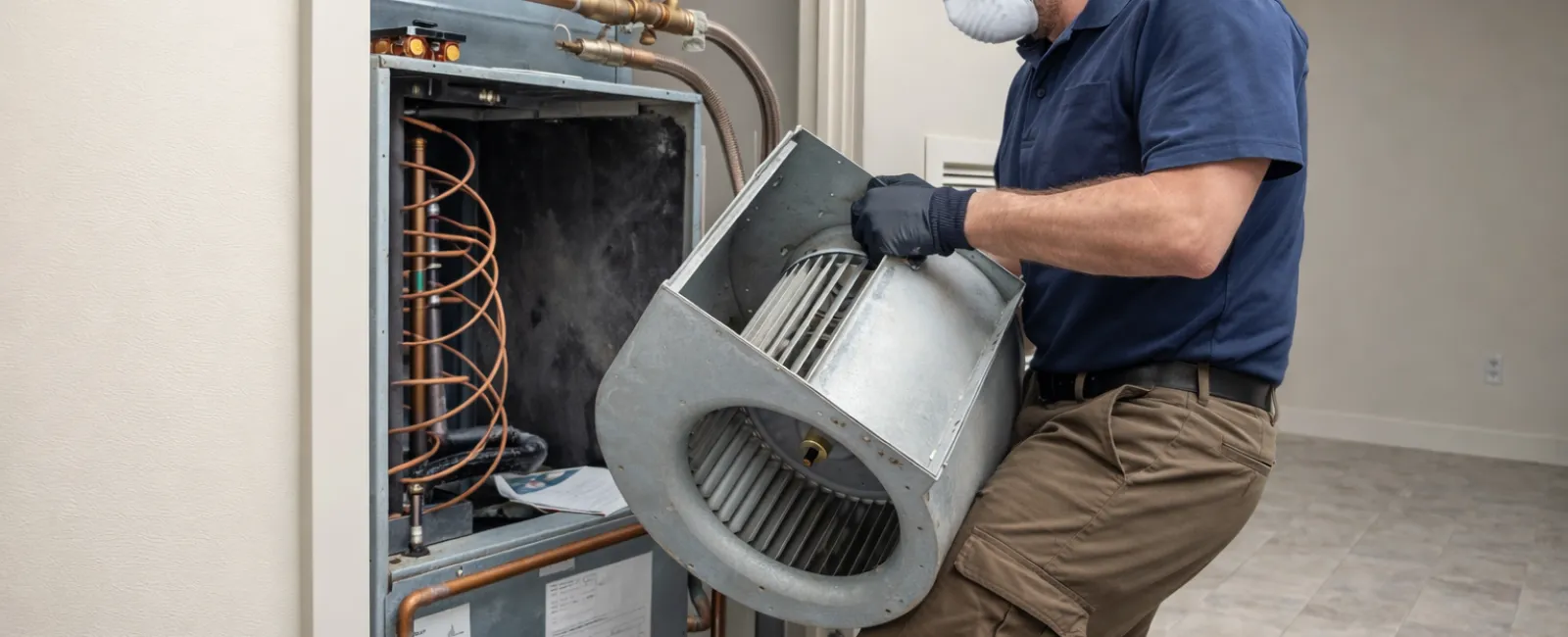
the blower motor, the component inside your HVAC system that pushes conditioned air through your ductwork and into your living space. When
it starts to fail, you'll usually know something is wrong well before it stops
working entirely.
This guide walks through the
most common signs of a failing blower motor, what causes them, and what to
expect when it's time to call in a professional.
What Does the Blower Motor Actually Do?
The blower motor, located inside your air handler (or furnace cabinet), powers the fan that circulates air
throughout your home. Every time your thermostat calls for heating or cooling,
the blower motor kicks on, pushes air across the heat exchanger or evaporator coil, and sends it through your ductwork to every room in the
house.
Without the blower motor
running, your system can heat or cool the air just fine, but the conditioned air never reaches where it needs to go. It stays trapped inside the unit. This is why a failed
blower motor makes your home feel stuffy and uncomfortable, even when the rest
of the system appears to be working normally.
There are two main types of
blower motors you'll find in residential systems:
- Single-speed motors: These run at full capacity every time they turn on. They're common in older systems and are generally less efficient.
- Variable-speed (ECM) motors: These adjust their speed in response to the system's needs at any given moment. They run more quietly, use less energy, and tend to maintain more consistent comfort throughout your home.
Regardless of the type of your system, the symptoms of a failing motor often look similar.
Common HVAC Blower Motor Symptoms
1. Weak or Reduced Airflow From Your Vents
If you notice that the air
coming from your registers feels noticeably weaker than usual, the blower motor
may be struggling. A motor that's wearing down, clogged with debris, or dealing
with a failing capacitor can't spin the fan blade as forcefully as it should,
which means less air makes it through your ductwork.
That said, weak airflow isn't
always the blower motor's fault. A severely dirty air filter, blocked or leaky
ducts, or a clogged evaporator coil can create the same symptom. A technician
can quickly determine where the restriction is happening.
2. No Air Coming From the Vents at All
A complete loss of airflow is one of the clearest signs that the blower motor has stopped working. If
you hear the system kick on, the outdoor unit starts, or you can tell the furnace is firing but no air is flowing through your vents, the blower motor
is likely the reason.
Other possibilities include a
tripped breaker, a blown fuse on the control board, a faulty relay, or a
thermostat issue. A thorough diagnostic will rule these out before any parts
are ordered.
3. Unusual Sounds Coming From the Air Handler
A healthy blower motor runs
relatively quietly. When something is wrong, you'll often hear it before you
feel it in your airflow. Pay attention to:
- Squealing or screeching: Often caused by worn bearings inside the motor. In older belt-driven systems, a frayed or slipping belt can create the same sound.
- Rattling or banging: Could indicate a loose or broken component inside the blower wheel, or debris caught in the fan.
- Humming without airflow: If the motor is receiving power but not spinning, the capacitor may have failed, or the motor itself may have seized.
Any new or worsening noise from
your HVAC system is worth getting checked out promptly. Ignoring bearing problems and electrical issues tends to get worse quickly and can lead to more expensive repairs down the road.
4. A Burning Smell From Your Vents
A burning odor when the system
runs is a sign that the blower motor may be overheating. This can happen when
the motor is working too hard because of a clogged air filter, a dirty blower
wheel, or simply age and wear. Overheating is serious; if left running in this
condition, the motor can burn out entirely.
If you notice a burning smell,
turn your system off and call for service. Some systems will shut themselves
down automatically when a motor overheats, but it's not worth waiting for that
to happen.
5. System Overheating and Shutting Off
Your HVAC system has built-in
safety limits designed to shut everything down if internal temperatures get too
high. If your blower motor is struggling to move air, heat builds up inside the
unit rather than circulating through the house. The system then trips its limit
switch and shuts off.
If your system runs for a short time and then shuts down before reaching your desired temperature, this
is one of the patterns worth mentioning to your technician. It can also point
to issues beyond the blower motor, so a proper diagnosis matters.
6. Unexpectedly High Energy Bills
A failing or dirty blower motor
has to work harder to do its job. When a motor strains against a clogged wheel
or failing internal components, it draws more electricity. If your utility
bills have crept up without any obvious explanation, no change in thermostat
settings, no unusually hot or cold weather, the blower motor is one component worth checking.
This is particularly worth
noting if you have a variable-speed motor that seems stuck at one
speed. These motors are designed to adjust automatically, so constant
high-speed operation can indicate the motor isn't functioning correctly.
What Causes a Blower Motor to Fail?
Blower motors don't usually fail
without a reason. The most common causes include:
- Age and normal wear: Most residential HVAC systems are designed to last 15 to 20 years. The blower motor is built to match that lifespan, but bearings and windings wear down over time regardless of how well the system is maintained.
- Dirt and debris buildup: Dust, pet hair, and household debris accumulate on the blower wheel over time. A heavily fouled wheel adds weight and resistance, forcing the motor to work harder. In severe cases, the weight of the buildup alone can burn out the motor.
- Overheating from restricted airflow: Running your system with a clogged air filter is one of the fastest ways to shorten your blower motor's life. Restricted airflow causes heat to build up, and motors that overheat repeatedly tend to fail early.
- Moisture exposure: HVAC equipment installed in basements, crawl spaces, or attics is sometimes exposed to excess humidity. Moisture can cause electrical shorts and speed up internal corrosion.
- Capacitor failure: The capacitor is a small component that helps the blower motor start and run smoothly. When it fails, the motor may hum but not spin, or it may struggle to reach full speed. Capacitors often fail before the motor itself, and replacing one can extend the life of an otherwise healthy motor.
What Professionals Look at During a Blower Motor Diagnosis
When a technician comes out to
diagnose a blower motor issue, they aren't just looking at the motor in
isolation. A proper diagnosis includes:
- Checking the voltage at the control board to confirm the motor is receiving the correct electrical signal
- Testing the capacitor to see if it's still within manufacturer specs
- Inspecting the blower wheel for debris buildup, damage, or looseness on the shaft
- Checking motor temperature and listening for bearing noise
- Looking at the overall condition of the air handler for signs of moisture, corrosion, or heat damage
This process helps distinguish
between a motor that needs to be replaced and one that has a simpler, less
expensive problem, like a bad capacitor or a dirty wheel that can be cleaned.
Repair vs. Replacement: What to Expect
Not every blower motor problem
requires a full motor replacement. In some cases, the motor itself is fine, but
a supporting component has failed. Capacitor replacement is one of the most
common blower motor repairs and is significantly less expensive than a new
motor.
When the motor itself does need
to be replaced, the cost varies depending on several factors:
- Motor type: Variable-speed (ECM) motors cost considerably more than single-speed motors, both for the part and the labor involved in programming them to work with your specific system.
- System age and brand: Some motors are easier to source than others. Older systems or less common brands may require parts that take longer to obtain or cost more.
- Labor: Installation complexity varies. Motors mounted in tight or awkward locations take more time to replace.
- Whether to repair or replace the system: If your HVAC system is already 15 or more years old and requires multiple repairs, replacing just the blower motor may not make financial sense. A technician can walk you through the numbers honestly so you can make the right call.
Rather than quoting specific
figures that may not reflect current parts pricing or your system's specific
requirements, it's worth getting a diagnosis and estimate from a qualified
technician. The right answer depends on your equipment, its age, and what else
may be going on with the system.
Can Regular Maintenance Prevent Blower Motor Problems?
Yes, and it's one of the most
straightforward ways to protect your investment. The two biggest contributors
to early blower motor failure are dirty air filters and skipped maintenance
visits. Staying on top of both can make a meaningful difference in how long
your motor lasts.
Changing your air filter on
schedule, typically every one to three months depending on your home and
system, keeps airflow unrestricted and reduces the amount of dust that reaches
the blower wheel.
Changing your air filter on
schedule, typically every one to three months, depending on your home and
system, keeps airflow unrestricted and reduces the amount of dust that reaches
the blower wheel. A seasonal AC
tune-up or furnace maintenance visit also includes an inspection of the
blower assembly, so problems are caught early rather than after
they've caused a failure.
When to Call a Professional
Some HVAC problems are worth
monitoring for a day or two. Blower motor symptoms generally aren't among them.
If you're noticing weak airflow, strange sounds, a burning smell, or a system
that keeps shutting off before your home reaches temperature, those are signs
that something is wrong right now, not eventually.
The sooner a failing motor is caught, the better your options are. A motor that's struggling but still running can often be repaired at a lower cost than one that's burned out completely. If you're in Canton, Woodstock, Roswell, Alpharetta, or the surrounding North Georgia area and you're seeing any of these symptoms, the team at MR. HVAC can diagnose the problem and walk you through your options. Give us a call at (770) 213-4111 or schedule service online to get started.
Do I need to replace the whole HVAC system if the blower motor fails?
Not necessarily. If the system is relatively young and in otherwise good condition, replacing the blower motor is often the right call. If the system is 15 or more years old and has been needing repairs more frequently, it may make more financial sense to invest in a new system. Our technicians can assess your equipment and give you an honest recommendation. Learn more about AC installation and heat pump installation options if a full replacement makes sense for your situation.
Still not sure what's wrong with your system? MR. HVAC serves Canton, Woodstock, Roswell, Alpharetta, and the surrounding North Georgia communities. Whether you need a quick diagnosis or are ready to discuss furnace repair, AC repair, or a full replacement, we're here to help. Call us at (770) 213-4111, no pressure, just honest answers.


